One of the key lessons I learned from this class is how to adapt to changes in a project. I had many ideas for my documentary, but in reality, the process was far more complicated than I had anticipated. As I progressed through the project, I encountered unexpected challenges that required me to rethink my initial concepts. One of the biggest changes came right before I submitted the final cut. However, with everything I learned in class, I think I was able to make the necessary adjustments that ultimately strengthened my film. The feedback from my peers helped me deliver the message I wanted. This experience taught me that in creative projects, it’s okay to make changes and approach your original idea with a fresh perspective.
As I continue my studies in media and communications, I will use the ideas I learned in this class. I am taking Intro to Interactive Web Design, and I think what I learned in this class will benefit me in the creative projects for that class.
For my 60-second documentary, I wanted to explore the tension between athletes and artists at Muhlenberg. This idea ultimately came from a conversation card from the Dining Hall, which is the primary focus of my documentary. I would sit at the 4 circular tables in front of the dining hall with my teammates every day, greeted with this card. Seeing this, I started my research and eventually began to feel guilty after seeing posts from the Muhlenberg Weekly stating that the tables I sit at each week are a No-Go zone.
“Those round tables–you know the ones I am talking about. I am talking about the four big ones directly in the front with about eight chairs around them. Do not dare to sit there. Those are for the athletes. The men’s sports teams typically sit at those tables, using all of them and often dragging…
That comment stuck with me. It showed how these small social rules or jokes can turn into bigger assumptions about who belongs where. I began thinking about how I had never perceived this tension and started looking for its source. I came to the conclusion, which turned into my main argument, that the tension between athletes and artists at Muhlenberg is fueled by stereotypes and herd mentality on social media platforms like YikYak, where anonymous posts amplify divisions that don’t truly exist in daily campus life. Through still images of familiar spaces, I wanted to show that the places themselves aren’t divided. The divide only appears when people force it to be true. I did this by going around campus and taking pictures of places the Muhlenberg Website had photographed during events that were now unpopulated. After I presented my argument and the yikyak posts, I reversed the images, showing the unpopulated places before the populated ones, to emphasize how the college is a community that cannot function without everyone together.
Working on this project was difficult. I found recording the lines hard since it was a foreign skill to me; listening back to my voice was hard as I tried to tell myself what I was saying was even true or if I was feeding into the perceived tension. During recording, I had to go to the library to record the lines and was lucky to find a teammate in one of the personal work studios. While discussing the project out loud with him, I heard others around us working on homework laugh and question each other, which almost made me scrap the entire project for a new idea out of fear of sounding stupid, but I decided it only validated what I was talking about. I believe this moment gave me confidence about what I was talking about, and instead of revising and editing further, I kept my initial emotions at the time of recording rather than letting that moment sour how I felt about what I said. I think this project really revealed the bias I have as a Muhlenberg athlete. I found it impossible to let go of that part of me, but I tried my best to remember my past in High School, when the sports I played did not define me as much as they do on this campus. Im excited to add the 2 minutes and 30 seconds of time and video to this project to fully realize this project.
Dorothea Lange was an American photographer and she was very well known for documenting the lives of immigrants during times of economic hardship and societal injustice. Dorothea Lange used her camera to make hidden pain visible and to remind people that policies and statistics are really about human beings. I believe this is shown best in Grab a Hunk of Lightning (Taylor, 2014), where Lange herself said her job was to “make visible what’s invisible.” Lange cared deeply about the suffering of people and felt a responsibility to show the truth. She believed her photography could reveal things that reports and numbers couldn’t. Her work wasn’t just about taking pictures, it was about giving a voice to those who were ignored. Her goal was to show the injustice that she saw to those who could not see it for themselves. Through her lens, ordinary moments became proof of strength and struggle, meant to make people care and push for change.
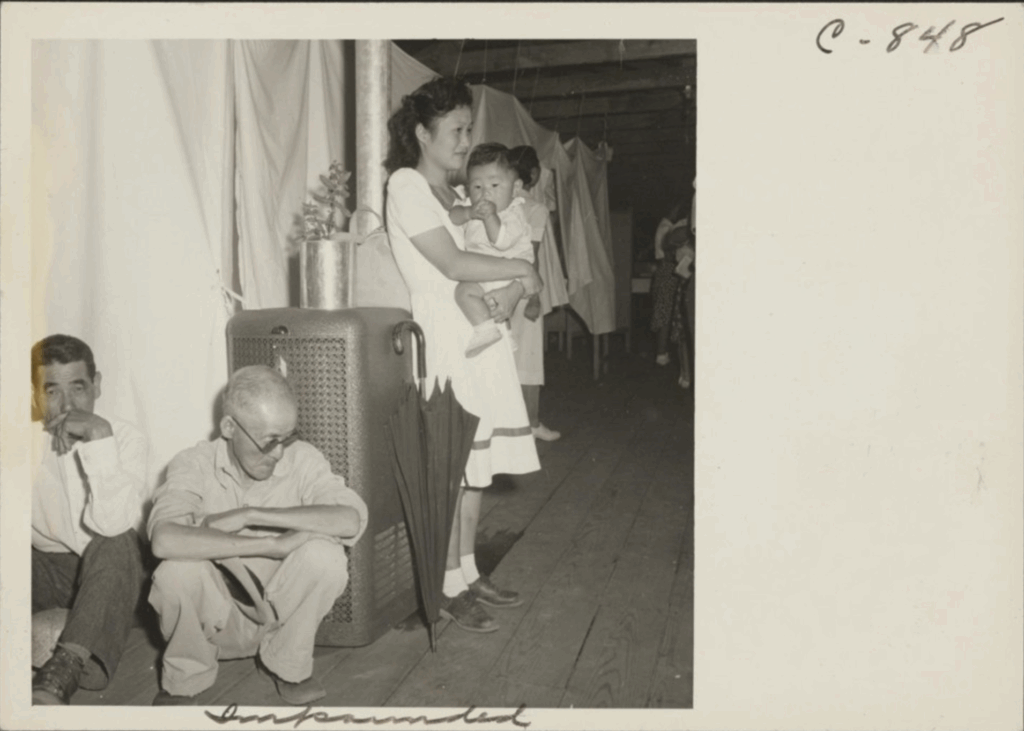
After looking through the catalog, I picked the image which shows a Japanese American family inside a cramped barrack at the Manzanar internment camp in 1942. A woman holds her child near a fabric partition while two men sit on the floor beside a miniature stove (Lange, 1942). The image creates a sense of emptiness, the family residing in the space has made it a home, even if only temporarily. Lange took this photograph to share the injustice these people were seeing, which would otherwise have been ignored as nothing more than a statistic. She wanted this photo to humanize those affected by government policies and social inequality. The familys calm presence contrasts with the harsh, empty room around them. The thin curtain and bare walls show how much privacy and freedom they’ve lost, but Lange’s framing also lets us see their quiet resistance, not just their pain.
The documentary, Stranger with a Camera, tells the story of Hugh O’Connor. He was a Canadian filmmaker who was shot and killed in 1967 while filming the intense poverty crisis in Kentucky. The man who took his life was a local landowner, Hobart Ison, who was angry that outsiders kept showing up in his community to film and exploit his neighborhood and town. The director of the film grew up in the same area and uses the story to debate whether anyone truly has the right to film others and how a camera can both reveal issues and harm those who are suffering. It becomes less about the murder itself and more about the ethics of capturing those in socio-economic crises and the tension between capturing tragedy and respecting the dignity of those being filmed. The film argue that the act of filming can both expose truth and violate dignity, forcing viewers to confront the moral limitations of representation.
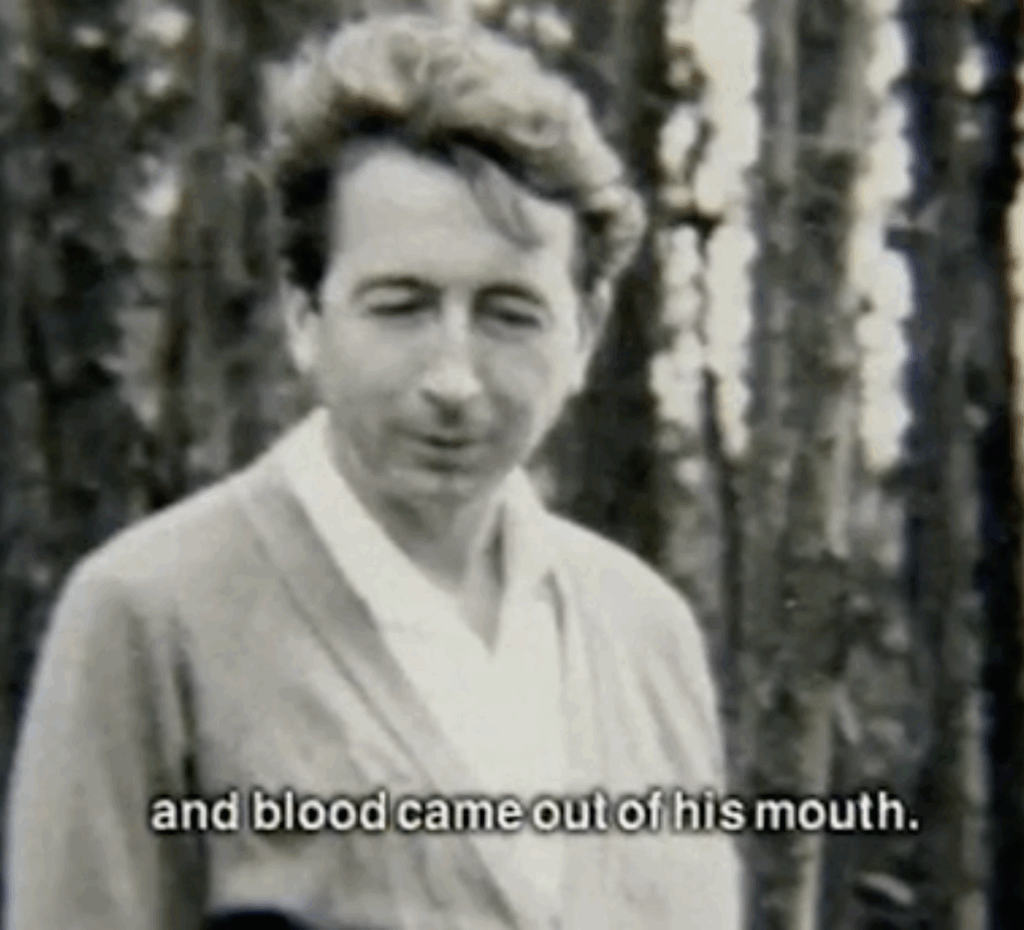
One of the most powerful scenes occurs right after the description of O’Connor’s death. The voiceover fades, leaving the screen on a still photograph of him. This then transitions to footage from the original film he was shooting before his death, showing a coal miner sitting on a porch shortly after returning from the mine. This moment leads to the film’s main idea about the risks of representation. The same camera O’Connor used to document poverty also became the cause of his death. By moving from his image to his work, the film shows how his attempt to reveal hardship instead exposed the tension between empathy and intrusion, raising the question of when filming someone’s reality turns into crossing a line. Barrett contrasts the image of O’connor and the coal miner to show how the very act of filming can become both a gesture of empathy and a source of violence.
This tension connects to a quote from Robert Coles, “Each of us brings, finally, a particular life to the others who are being observed in documentary work, and so to some degree, each of us will engage with those others differently, carrying back from such engagement our own version of them (Coles, 1997, Pg. 5)”. Coles explains that every filmmaker, whether they mean to or not, shows their own version of the people they capture on camera. In this scene, O’Connor’s version of the coal miner, empathetic but from an outsider’s view, clashes with Ison’s anger toward how his town was shown by outsiders. Barret’s editing makes this tension visible, showing how every act of filming has both moral weight and personal cost.
At the end of Chapter 1 of Doing Documentary Work, Robert Coles recalls William Carlos Williams describing the difference between being with people in their own private space and then later sitting at his typewriter in his home in Rutherford. Coles admires Williams because he wasn’t just a doctor or a writer but someone who tried to bridge both worlds. Williams explains that “When I’m there, sitting with those folks, listening and talking, I’m part of that life, and I’m near it in my head, too… Back here, sitting near this typewriter — it’s different. I’m a writer. I’m a doctor living in Rutherford who is describing ‘a world elsewhere.”
The idea of location is both a physical place while also being a place of perspective showing that documentary works shifts between being immersed in the lives of people who are being documented and then stepping back to try and give an unbiased interpretation. This tension highlights how our own location shapes the stories we tell. This matters because it shows that no one can fully separate themselves from their own background. Even when we try to be objective our location will always influence what we notice and how we describe it.
I can relate to this as my summer job put me into a position that I was not used to and found my beliefs shifting as I worked day to day. Working in a kitchen I felt like an outsider. Not only that, almost everyone was 10 to 15 years older than me. Though eventually I started to fit in more and started learning and sharing in the struggles, however, when I went home at the end of the night, I realized how different my daily life was from theirs. Like Williams described, I felt immersed while I was there, but aware afterward that I was only visiting a world that others lived every day.
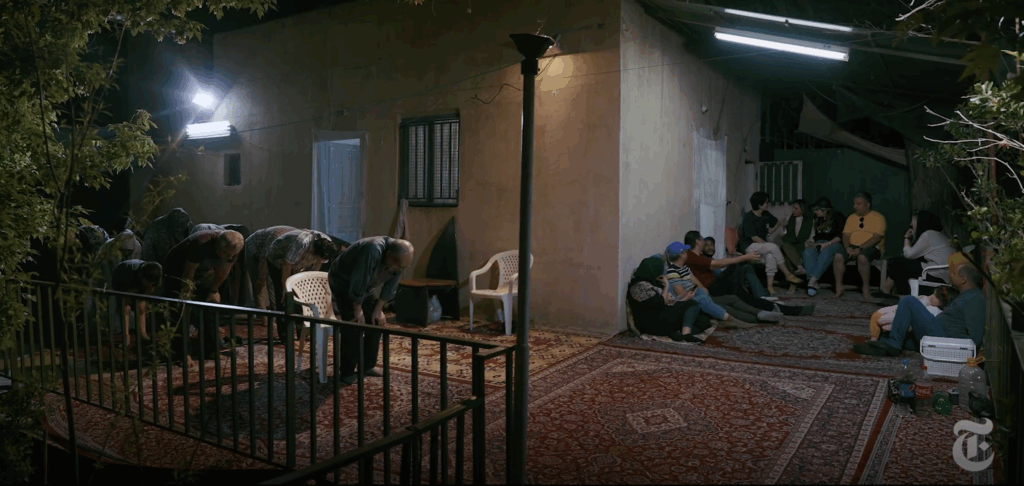
The documentary “A Move” portrays a progressive Iranian woman standing against patriarchal societal norms in Iran. The film explores themes of belief, identity, and belonging by documenting a family divided over faith. I believe the use of objects to physically divide the shot multiple times throughout the doc creates a sense of division among the family and culture. During a family gathering, the older generation is seen engaging in a group prayer while the younger generation can be seen talking instead of joining the prayer. There is not just an emotional divide, a physical division exists in the shot as well, with a light pole separating the two groups. This serves as a strong representation of how generational ideals and faith can divide a family.
By observing the Iranian family’s gathering, the filmmaker experiences firsthand the societal pressures the older generation puts on the new generation. These tensions are what Cole describes when he writes about venturing into “streets not our own” where one witnesses the moral and psychological dynamics of a community. Understanding the division in the household enables the filmmaker to produce scenes like the one described earlier. The filmmaker uses this imagery to document the family dynamic while also reflecting on how belief, tradition, and identity intertwine inside a home.
Familial connections are inherently complex, and the filmmakers effectively convey this through the use of visual storytelling techniques. The filmmaker’s silent approach urges viewers to interpret the story themselves without input from the filmmakers. The silence lets the audience concentrate on the documentary’s main topic, which allows for exploring the connections within family relationships and the subtle feelings that shape them, all while remaining uninterrupted by the filmmakers’ influence.
Through its visuals and silent observation, “A Move” illustrates how belief and tradition influence family life, revealing that home is not just a place of comfort, but can also be a source of division.