The documentary, Stranger with a Camera, tells the story of Hugh O’Connor. He was a Canadian filmmaker who was shot and killed in 1967 while filming the intense poverty crisis in Kentucky. The man who took his life was a local landowner, Hobart Ison, who was angry that outsiders kept showing up in his community to film and exploit his neighborhood and town. The director of the film grew up in the same area and uses the story to debate whether anyone truly has the right to film others and how a camera can both reveal issues and harm those who are suffering. It becomes less about the murder itself and more about the ethics of capturing those in socio-economic crises and the tension between capturing tragedy and respecting the dignity of those being filmed. The film argue that the act of filming can both expose truth and violate dignity, forcing viewers to confront the moral limitations of representation.
One of the most powerful scenes occurs right after the description of O’Connor’s death. The voiceover fades, leaving the screen on a still photograph of him. This then transitions to footage from the original film he was shooting before his death, showing a coal miner sitting on a porch shortly after returning from the mine. This moment leads to the film’s main idea about the risks of representation. The same camera O’Connor used to document poverty also became the cause of his death. By moving from his image to his work, the film shows how his attempt to reveal hardship instead exposed the tension between empathy and intrusion, raising the question of when filming someone’s reality turns into crossing a line. Barrett contrasts the image of O’connor and the coal miner to show how the very act of filming can become both a gesture of empathy and a source of violence.
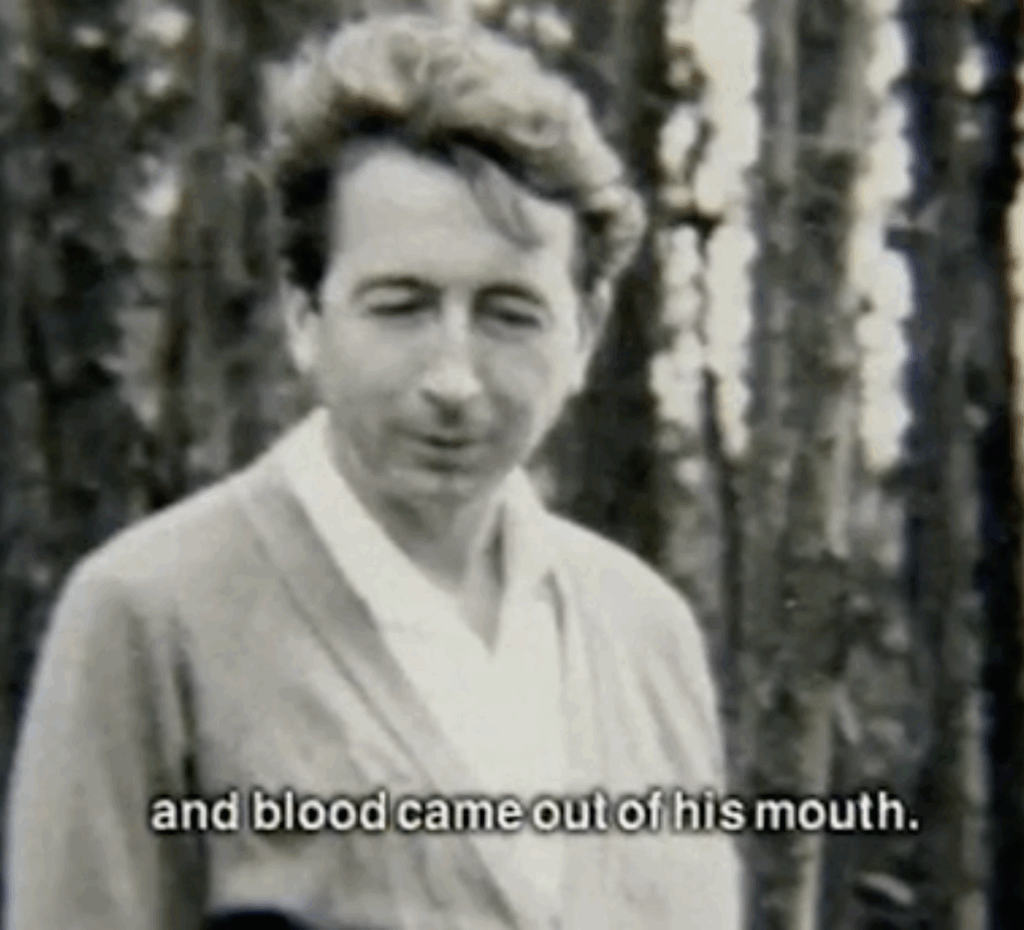
This tension connects to a quote from Robert Coles, “Each of us brings, finally, a particular life to the others who are being observed in documentary work, and so to some degree, each of us will engage with those others differently, carrying back from such engagement our own version of them (Coles, 1997, Pg. 5)”. Coles explains that every filmmaker, whether they mean to or not, shows their own version of the people they capture on camera. In this scene, O’Connor’s version of the coal miner, empathetic but from an outsider’s view, clashes with Ison’s anger toward how his town was shown by outsiders. Barret’s editing makes this tension visible, showing how every act of filming has both moral weight and personal cost.
Leave a Reply